
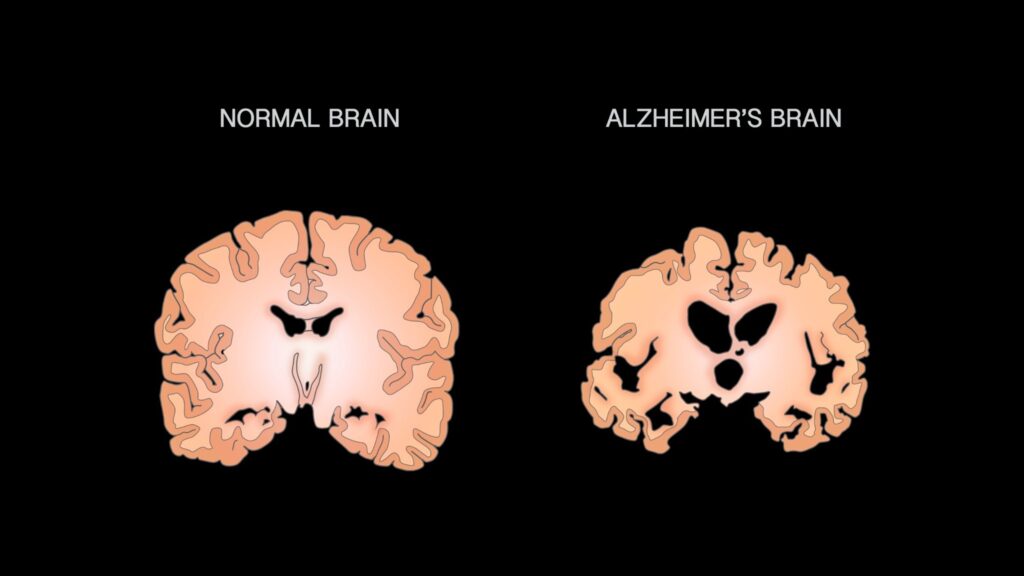
While Alzheimer’s remains a complex condition, research continues to expand our understanding of how the brain heals, adapts, and responds to supportive therapies. One area receiving increasing attention is Hyperbaric Oxygen Therapy (HBOT).
Why Oxygen Matters for the Brain
The brain relies heavily on oxygen to produce energy, maintain communication between neurons, detoxify and support healthy tissue function. While it represents about 2% of total body weight, it consumes roughly 20% of the body’s total resting oxygen, and it relies almost exclusively on aerobic metabolism, requiring a constant supply of oxygen. In Alzheimer’s disease, reduced blood flow, inflammation, and impaired cellular energy production may inhibit oxygen supply to the brain and contribute to cellular changes and cognitive decline.
HBOT works by delivering enriched oxygen in a pressurized environment, allowing oxygen to dissolve more efficiently into the bloodstream and reach areas of the brain that may need additional support.
Research demonstrates that increased pressure and oxygen availability may help:
- Support brain metabolism and cellular energy
- Reduce inflammation
- Improve circulation and spur the formation of new blood vessels
- Encourage neuroplasticity and brain repair pathways
- Support memory and cognitive function
- Support glial cells (the nurse cells and housecleaners of the brain)
What Recent Research Shows
Recent studies continue to highlight the potential of HBOT in supporting brain health and cognitive function.
A 2024 systematic review and meta-analysis examining randomized controlled trials found that HBOT showed promising effects on cognitive function and daily living abilities in patients with Alzheimer’s disease.
Study link:
Frontiers in Aging Neuroscience – Systematic Review of HBOT for Alzheimer’s Disease
Additional 2025 research in animal models demonstrated that HBOT may help reduce amyloid plaque accumulation, improve mitochondrial function, and suppress neuroinflammation—key processes associated with Alzheimer’s disease progression. Researchers also observed improvements in cognitive performance.
Study link:
Experimental Neurology – HBOT and Alzheimer’s Pathology Research
Emerging neuroscience research also suggests HBOT may support pathways involved in learning and memory, including increased expression of brain-derived neurotrophic factor (BDNF), a protein associated with neuroplasticity and cognitive health.
Study link:
Neuroscience – HBOT and Brain Plasticity Research
A Hopeful Direction in Brain Health Research
Research is still evolving, however growing evidence suggests that supporting oxygen delivery and brain metabolism may play an important role in cognitive health and recovery.
Perhaps most encouraging is the broader shift happening in neuroscience: researchers increasingly recognize that the brain may retain more capacity for repair and adaptation than previously believed.
For individuals and families affected by Alzheimer’s disease, that growing understanding brings something incredibly important—hope.
The post Alzheimer’s Disease, Brain Health, and the Potential of Oxygen Therapy first appeared on Hyperbaric Vermont.
The post Alzheimer’s Disease, Brain Health, and the Potential of Oxygen Therapy appeared first on Hyperbaric Vermont.